How Murals Shape The Spatial Identity of Hospitality Venues
Murals are still too often treated as decoration, when in reality they are one of the most powerful tools shaping how hospitality spaces are experienced and remembered. Large-scale murals and site-specific artworks are now central to how hospitality venues define identity, setting tone, atmosphere, and emotional impact from the moment a guest walks in.
In collaboration with the Restaurant & Bar Design Awards, we spoke with four leading hospitality design studios, all shortlisted or winners in the ‘Murals & Graffiti’ category, to explore how integrated artwork is genuinely influencing design decisions, not just finishing them:
Bryan O’Sullivan Studio
Hannes Peer Architecture
Studio Valerius
Behind the Door
Conversations were curated and moderated by The London Mural Company.
What stood out most is this: the strongest spaces are not decorated with art, they are built with it. When artists are brought into the process early, the work stops being surface-level and becomes structural to the identity of the space itself. Until that shift happens consistently, too many interiors will continue to feel finished, but not truly considered.

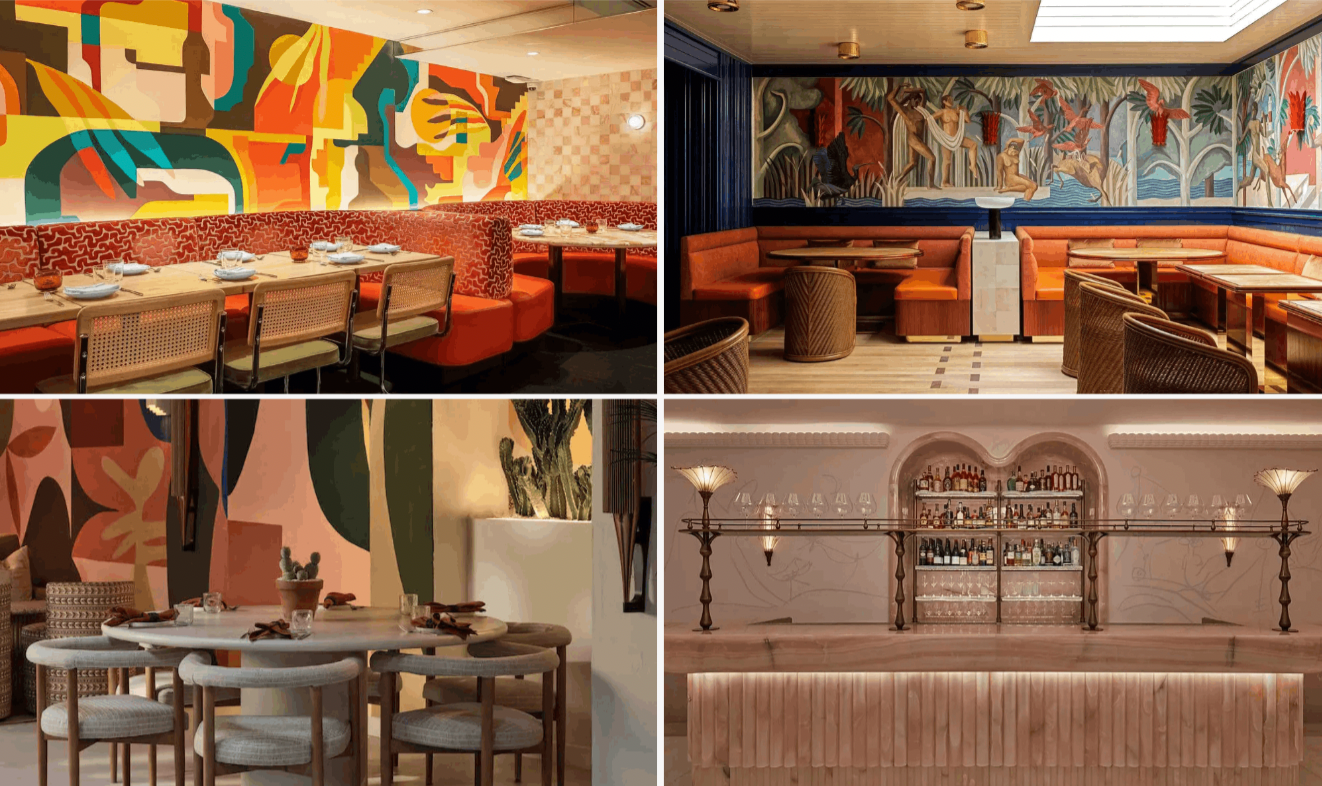
Designer: Studio Valerius / Project: Little Maven (New York, USA) / Mural Artist: Juliana Lupacchino (JULU)
At what stage in the design process did 'murals' or 'artwork' enter the conversation?
For Richard Chandler of Studio Valerius, it was embedded in the concept itself. Little Maven was centred around an artist's loft, and original artwork wasinseparable from that idea.
Bryan O'Sullivan came to it through concept too. Once the studio had decided to reclaim the snug at The Painter's Room at Claridge's, the mural followed naturally. "It felt important that the mural wasn't just decorative," says Bryan.
Hannes Peer began designing The Otter in New York by researching the city's history of painted interiors, from Sert to Haring to Warhol. "In New York, muralsare never decorative, they are narrative devices that construct identity and memory."
For Shona Doran at Ixchel, the mural was introduced in the very first design stage. It needed to set the tone before anything else could.

Designer: Hannes Peer Architecture / Project: The Otter at The Manner (New York, USA) / Mural Artist: Elvira Solana
How did the mural or artwork start shaping the space?
Once the artists became part of the process, the artwork stopped responding to the design, and started driving it.
At The Otter, artist Elvira Solana's vision shaped material choices, lighting, and spatial sequencing "almost like a second skin," says Hannes. At Little Maven, Richard describes a visual dialogue with the artists around colour, tone and texture. "The artwork and the design of the space became intertwined," he says.
TM Davy's faces in quiet conversation at The Painter's Room, designed by Bryan O'Sullivan Studio, anchored the venue's intimacy, sitting naturally withinits soft pastel palette.
At Ixchel, Rafael Uriegas's flowing forms gave Shonda room to layer in brutalist Mayan references as contrast. "Working with Rafael was a true honour," shesays. "We curated a unique composition to represent the lush feel of the Yucatan jungle."

Designer: Behind the Door / Project: Ixchel (London, United Kingdom) / Mural Artist: Rafael Uriega
What does large-scale artwork do for the guest?
All four studios point to the same thing: memory.
Shona notes that large artworks are known to lower anxiety and calm the nervous system; at Ixchel, the mural eases guests in before they've even sat down. Richard describes artwork as a visual anchor for the moments shared in space.
Bryan says it "creates a moment that feels personal and distinct; that's often what stays with people after they've left." Hannes puts it spatially: at The Otter,"the mural frames how you move through the space, how you sit, and how you perceive the environment as a whole."
When artwork is this considered, it isn't decoration. It's the space itself.
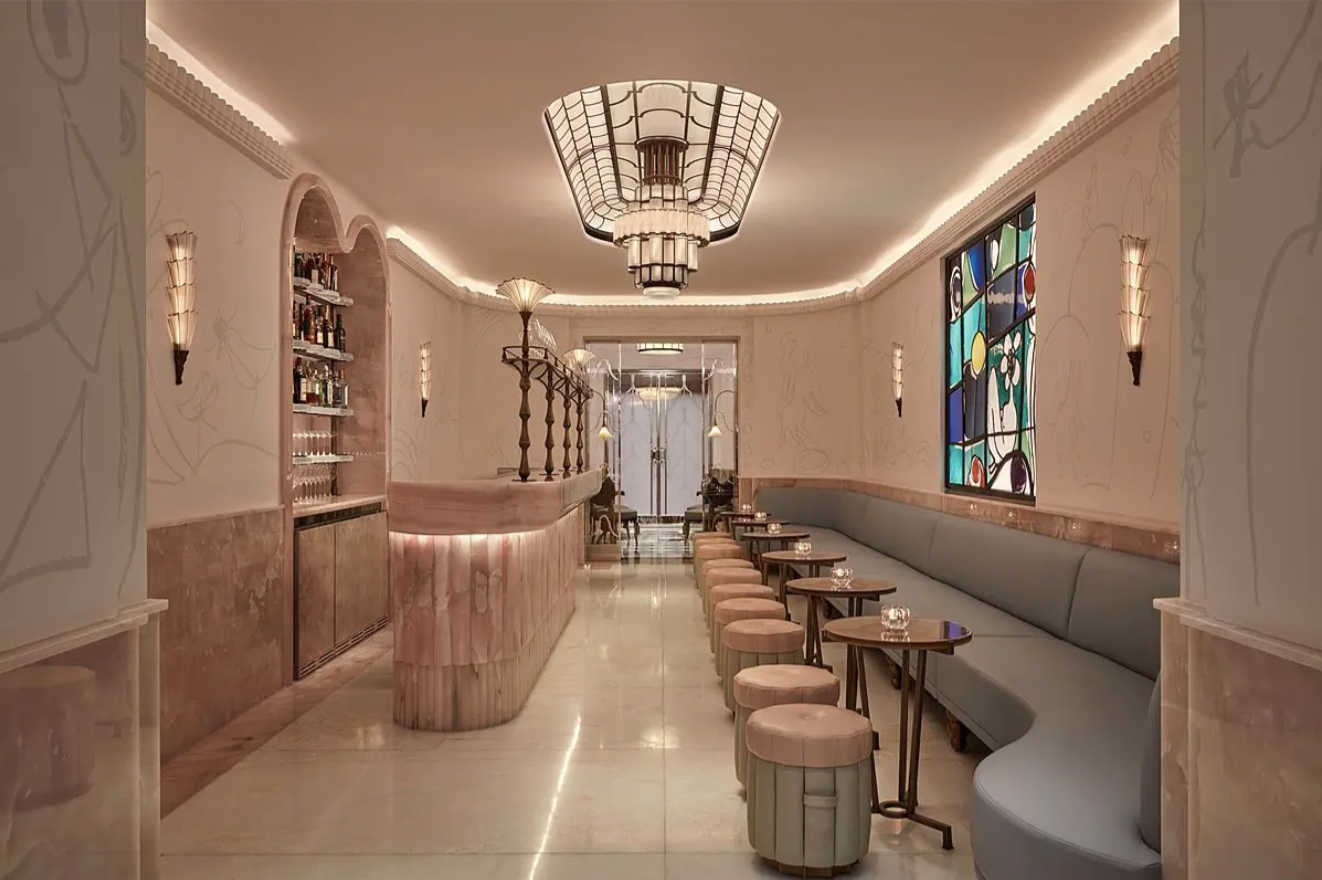
Designer: Bryan O'Sullivan Studio / Project: The Painter's Room at Claridges (London, United Kingdom) / Mural Artist: TM Davy
Do you see art and murals playing a larger role in shaping hospitality interiors in the future, and if so how?
Bryan believes that when art is considered from the outset, it becomes part of how a space is understood, adding depth and individuality that makes it morememorable. For Richard, art, whether a mural, a sculpture, or a light fixture, will lways have a place in hospitality.
Shona wants to see more of it: murals elevate ambience in ways that are subtle but powerful. And Hannes sees the future moving toward site-specific works thatare embedded in the architecture culturally, materially, and conceptually, creating, as he puts it, "a sense of collective memory, something that feels bothnew and strangely familiar."