Designing for the wall: The creative process behind here + now
When developing a mural, the wall itself is an important part of the design process.
Its size, material, condition and location can all affect how an artwork needs to be designed and how it can be applied. This is particularly true with large exterior projects, where the practical requirements of the building can have as much influence on the process as the creative brief.
Our Here + Now project at Thames Valley Business Park was a good example of this.
The brief was to create a contemporary interpretation of dazzle camouflage across a large concrete retaining wall, more than 100 metres long and around 6 metres high. The artwork was developed in-house by our design team, with the scale and characteristics of the wall considered throughout the process.

Completed wall at Here + Now Thames Valley Reading
Developing the artwork
The starting point for the project was dazzle camouflage, a style originally developed to make it difficult to judge the speed, direction and distance of ships.
For Here + Now, the idea was not to recreate traditional camouflage patterns, but to take some of the visual characteristics of dazzle and develop them into something more contemporary.
The initial preference from the client was for the dazzle camouflage direction, but they also wanted to see how the idea could work through different colour palettes. We explored greens in response to the wellness aspect of the building, fluorescent colours that connected with the building's brand colours, as well as brighter and more expressive options.
There was a good piece of feedback from the client at this stage that helped set the tone for the creative development:
"They should let rip a bit."
That gave us a useful starting point. The intention was for the artwork to feel bold and energetic, rather than being overly restrained.
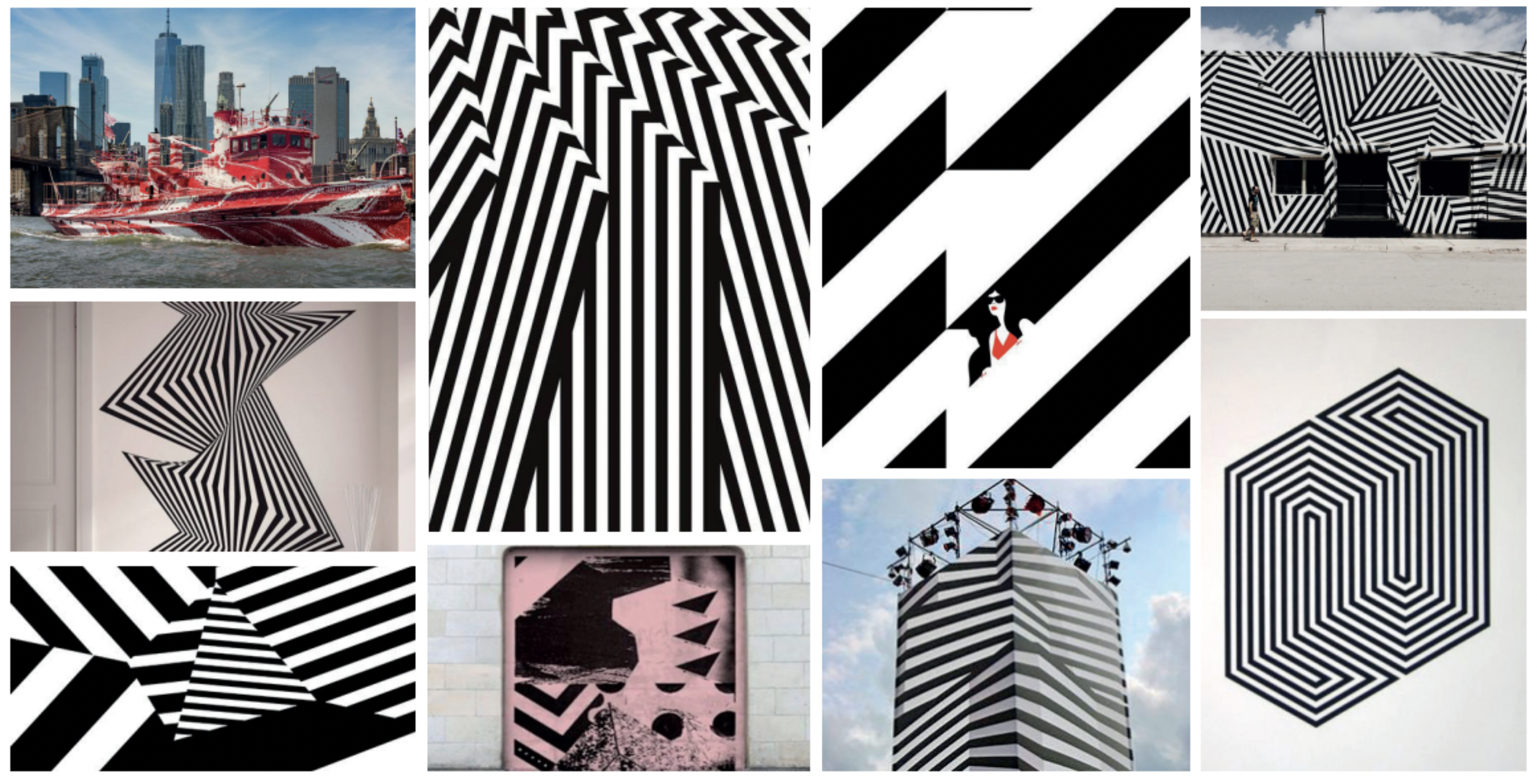
Initial Mood board from the design process
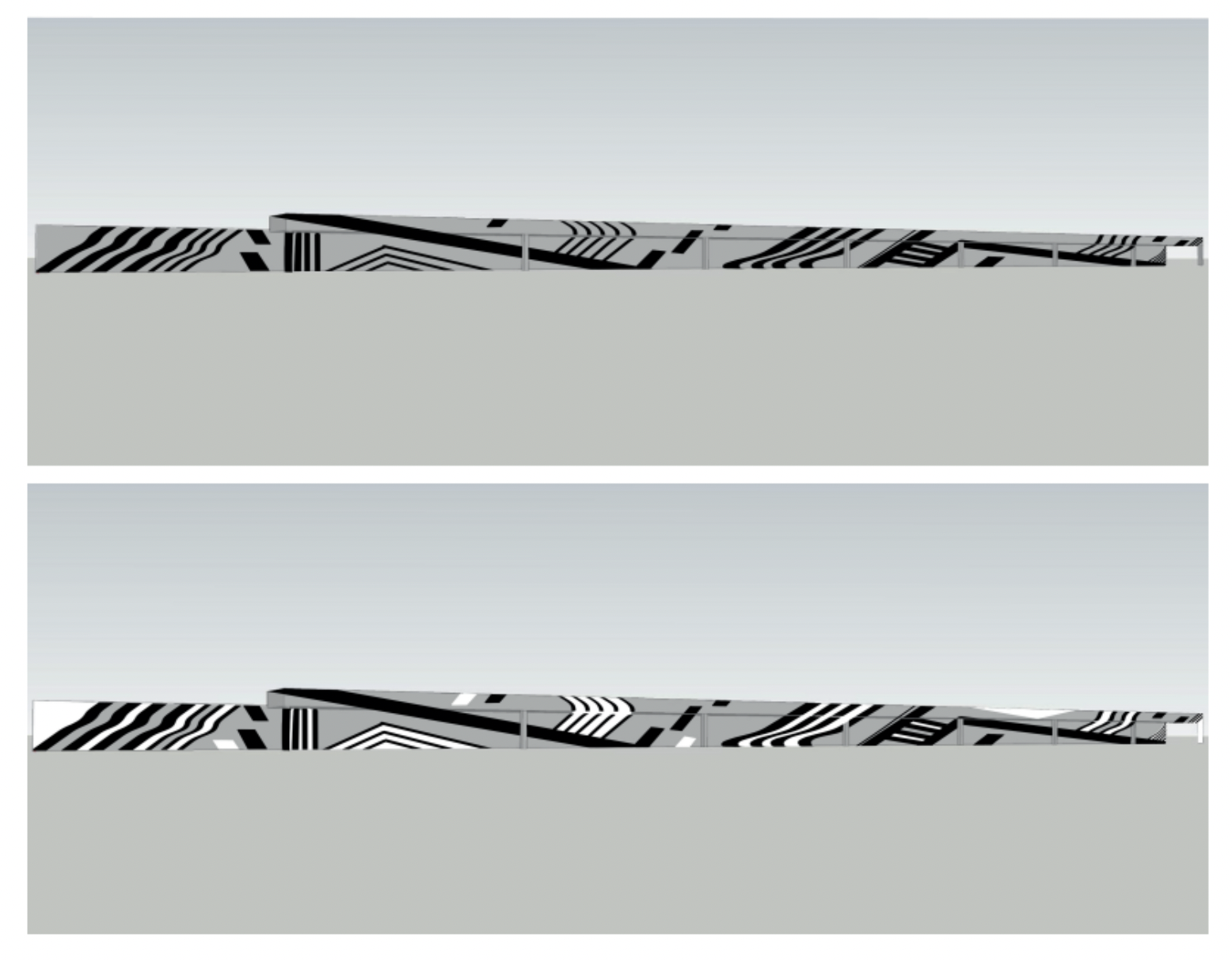
Initial design directions for the space.
At more than 100 metres long, the artwork needed to work as one continuous composition while also holding its own at different points along the wall.
A design that works well at one end of a wall can easily lose its impact when repeated across a much larger surface. We therefore considered the overall rhythm of the piece, how the shapes changed in scale and how the different sections connected with one another.
The surrounding site was also important. The mural sits within a landscaped business park, so the colours and forms needed to work alongside the existing environment rather than compete with it. We explored bold geometric forms, changes in scale and overlapping shapes to create movement across the length of the wall. As the artwork needed to work across such a large surface, we also looked at how the composition would be experienced from different distances.
The design was developed digitally and tested against the wall using scaled visualisations. This helped us understand how the artwork would sit within the surrounding landscape and architecture before moving into production.
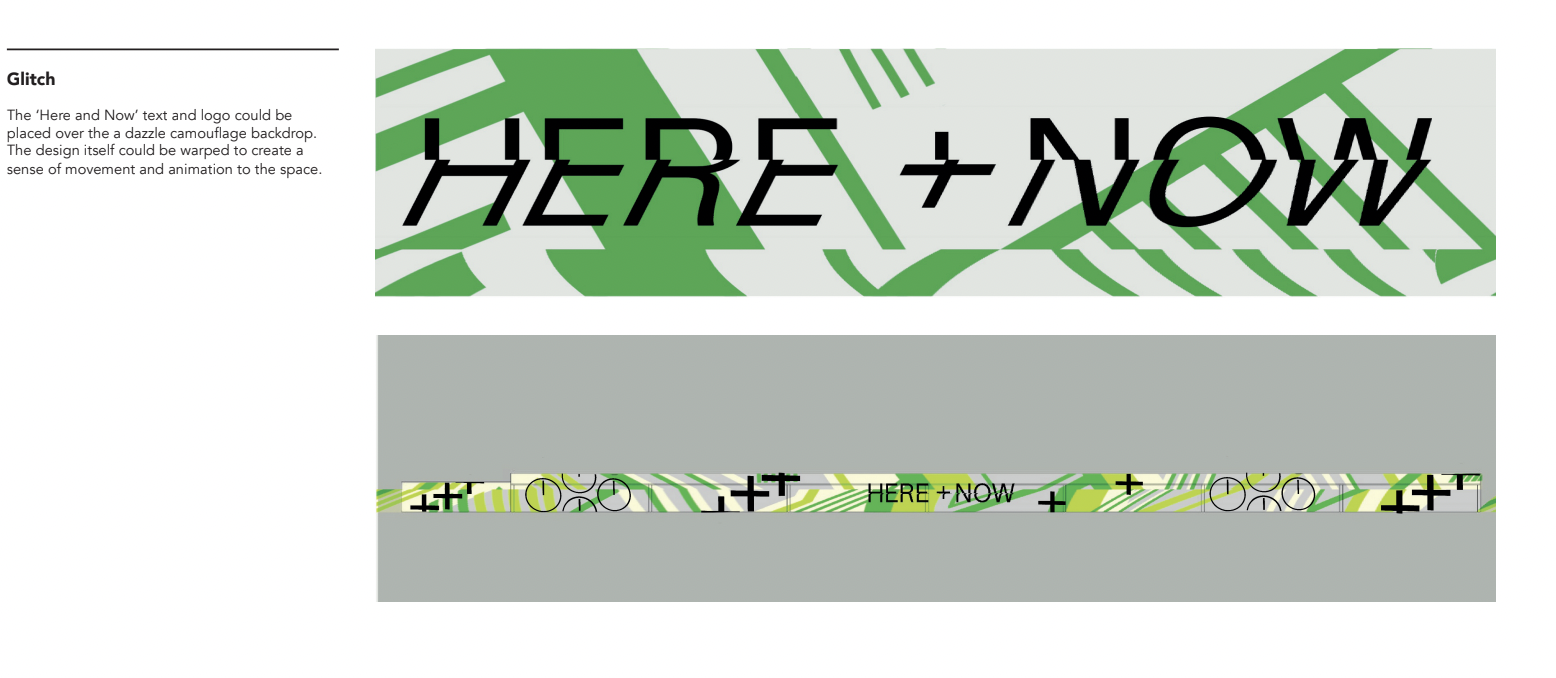
Refining the artwork for Here + Now
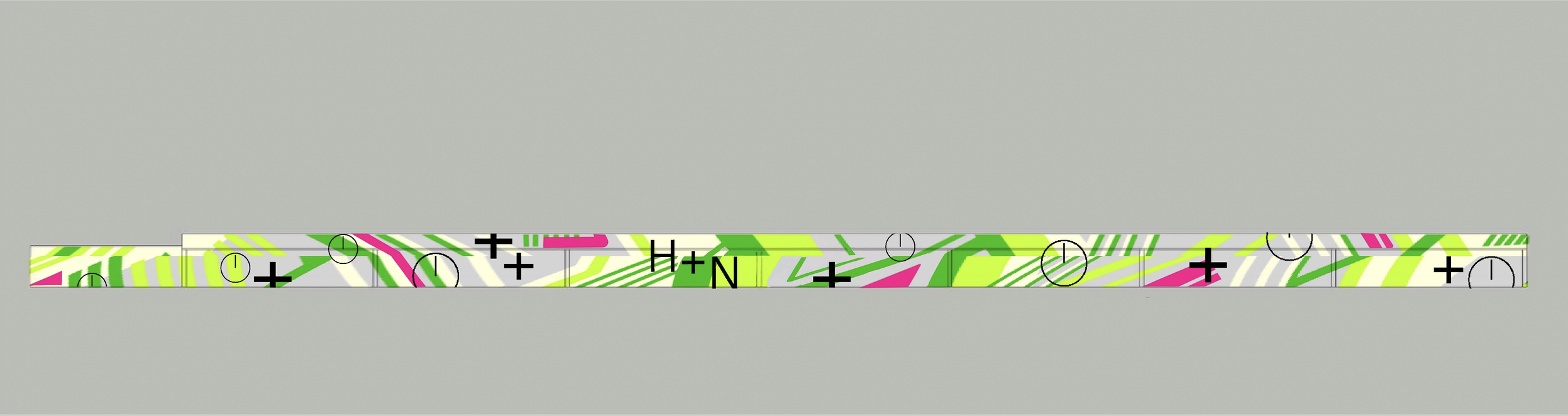
The final design, with the balance of colours and coverage refined and the text and symbols reduced to create a more abstract interpretation of the dazzle camouflage inspiration.
Understanding the wall
The wall presented some specific technical considerations.
It was a concrete retaining wall, rather than a standard rendered or masonry surface. Because of its construction, moisture needed to be able to pass through the wall.
This meant that we couldn't simply treat the surface in the same way as a conventional exterior mural. The amount of paint that could be applied to the wall had to be considered, along with the type of paint and sealant that would be suitable for the surface.
These requirements were discussed as part of the design and planning process rather than being left until the installation stage.
Choosing the right paint system
We needed to use a specialist breathable concrete paint that would allow the wall to continue to perform as intended. The sealing system also needed to be suitable for the surface and the external conditions.
Material selection is an important part of any exterior mural project. Different surfaces require different preparation and paint systems, and the environment can have a significant effect on how the finished artwork performs over time.
For this project, the technical requirements of the wall also influenced the artwork itself, as we needed to work within the areas that could appropriately be covered.
From design to installation
Once the artwork had been approved, it needed to be transferred from the digital design onto the physical wall.
At this point, the scale of the project became much more apparent. Working across a wall of this size required careful planning, accurate setting out and coordination of the installation team.
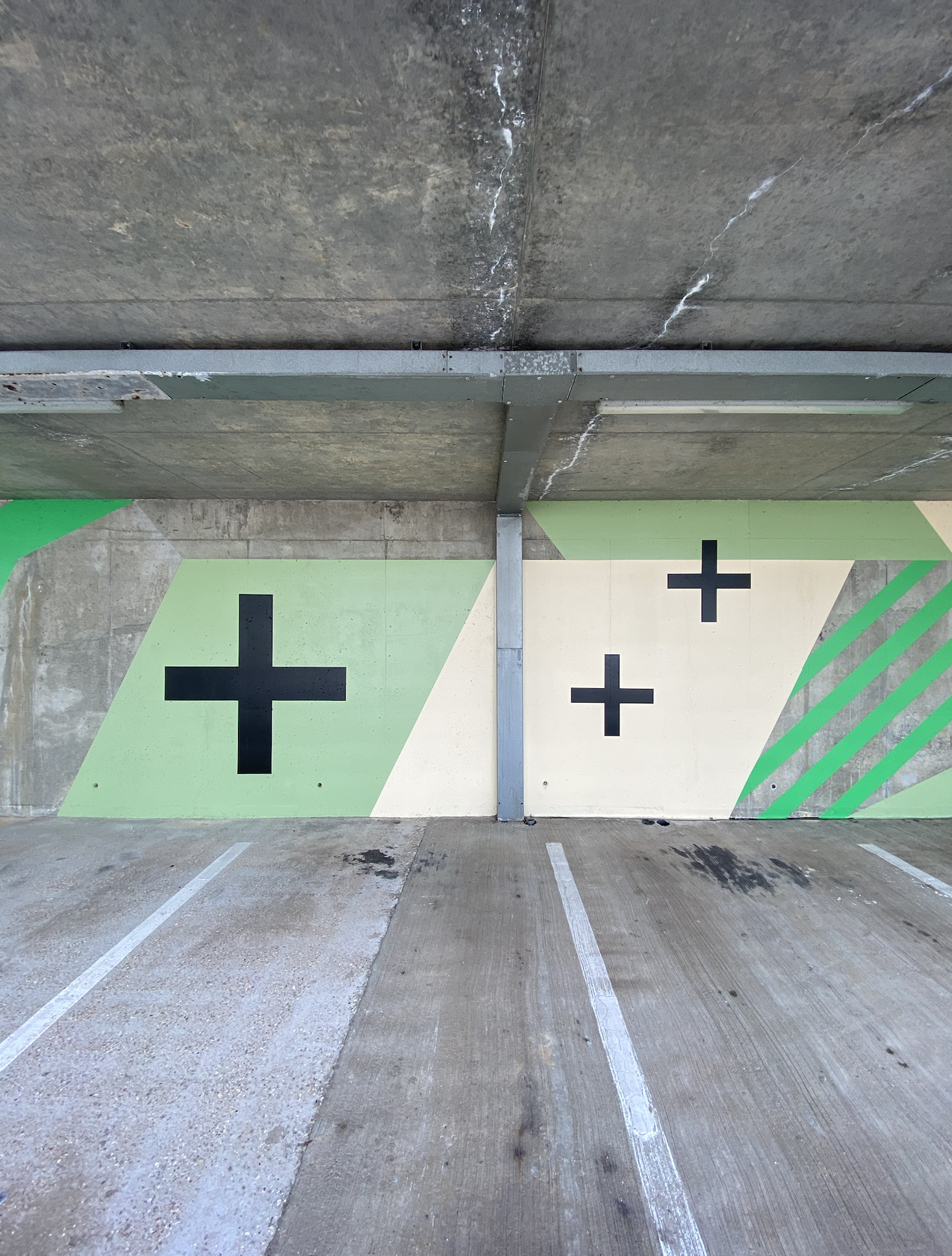
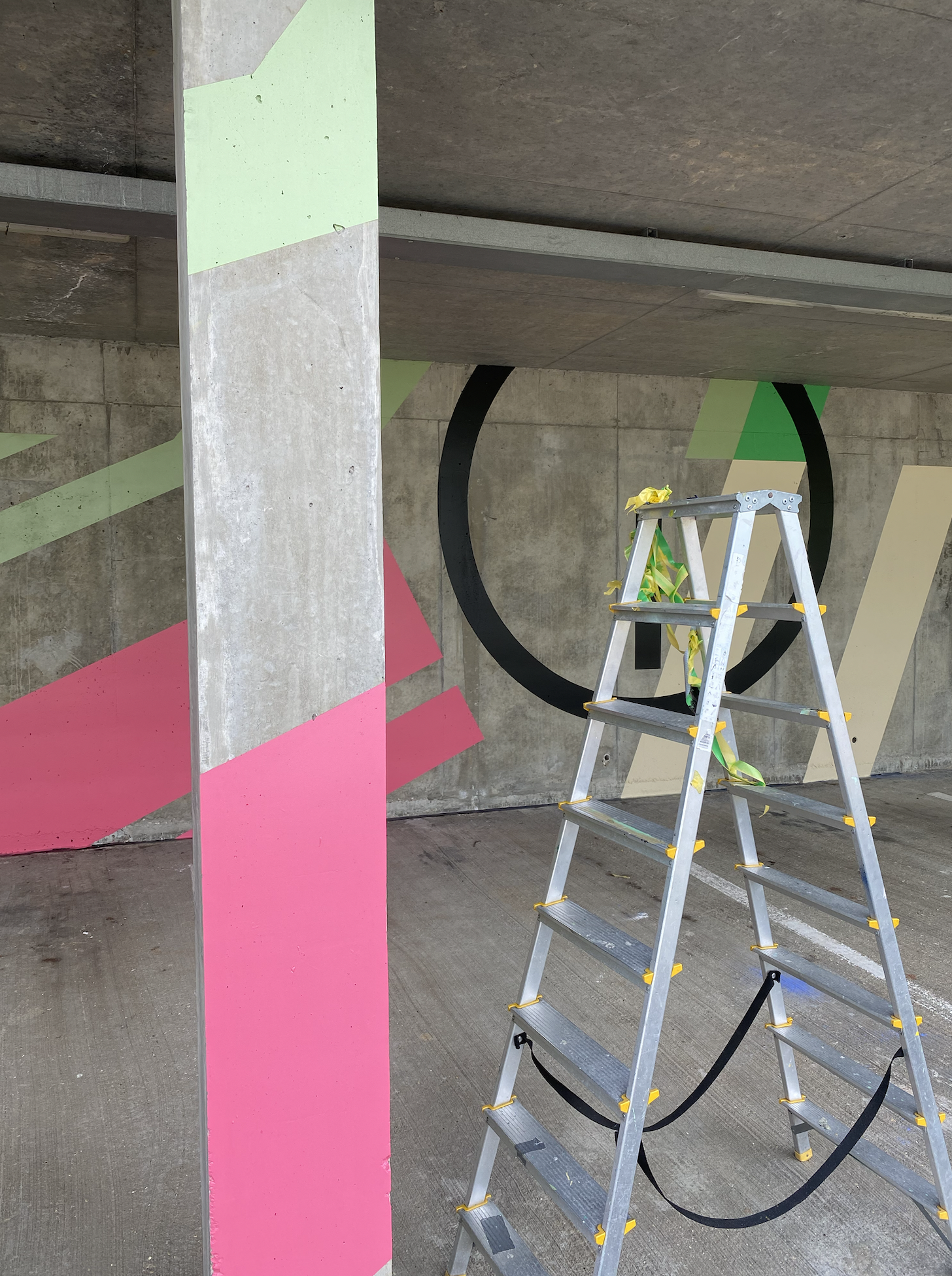
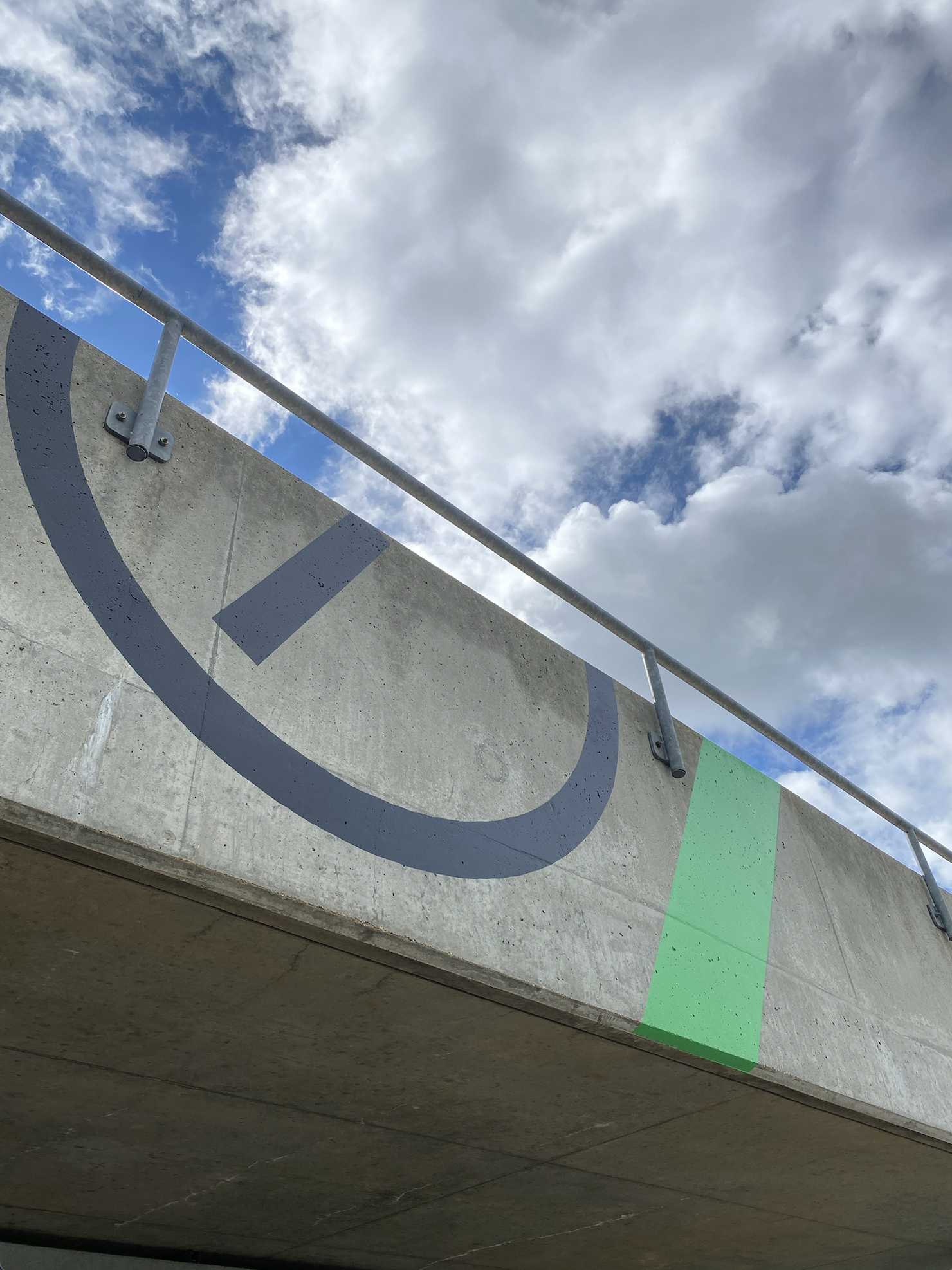
The installation took just over ten days. Throughout the process, the team had to work within the requirements of the concrete surface and the specified paint system while maintaining the proportions and positioning of the original artwork.
Seeing the design develop across the full length of the wall also gave a different perspective on the work. Individual shapes and sections that had been considered on screen became part of a much larger composition when viewed across the site.
Designing with the surface in mind
Here + Now is a good example of why we consider the physical characteristics of a site from the beginning of a mural project.
The creative brief, the architecture, the material of the wall and the practical requirements of the installation all have a relationship with one another.
In this case, the fact that the wall needed to remain breathable influenced both the material specification and the way the artwork was applied. The scale and location of the wall then influenced how the artwork itself was developed.
For us, this is an important part of the design process. The artwork needs to work visually, but it also needs to be appropriate for the surface, the building and the environment it is going into.
Here + Now brought together a number of different parts of our work, from developing the artwork and interpreting the original brief to understanding the construction of the wall and finding the right materials for the installation.
It was a project where the creative and practical sides needed to be considered alongside each other from the beginning. The finished mural is the result of that process, with the design developed specifically for the scale, setting and characteristics of the site.
Project details
Project: Here + Now, 2022
Location: Thames Valley Business Park, Reading
Artwork: The London Mural Company, in-house design
Wall: Concrete retaining wall, approximately 100m x 6m
Installation: 10 days